

UPCOMING PROJECTS
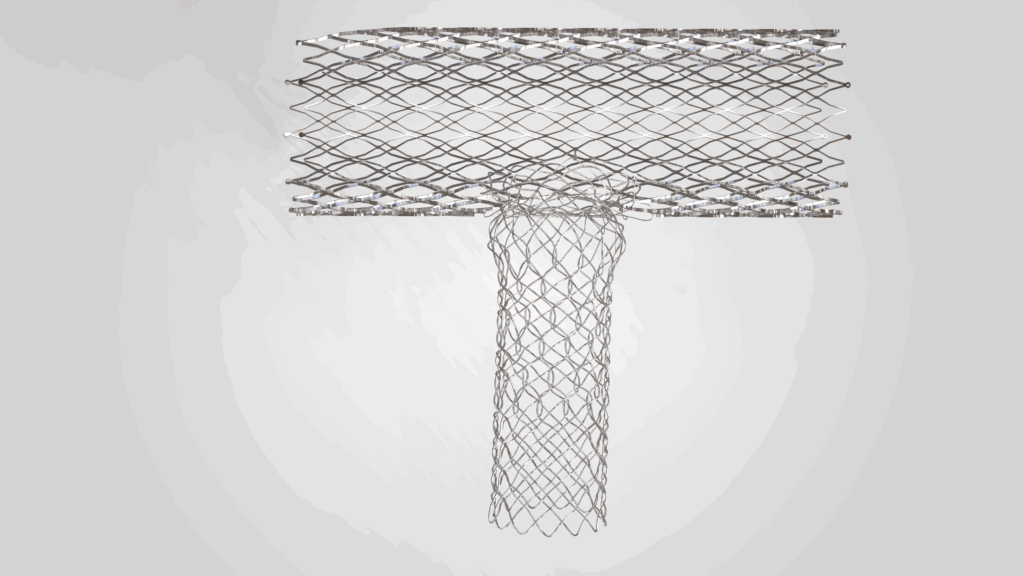
Our modular T-Stent connection technology opens up vast therapeutic perspectives.
Beyond current applications, we are developing specific solutions to extend our approach to other critical anatomical zones.
Discover here the priority research areas on which our teams and partners are focusing their efforts for the coming years.
APPLICATIONS AND CHALLENGES OF THE CONNECTED VENOUS T-STENT
The concept of the connected stent (T-Stent) can be applied at several levels of the deep venous system:
- The iliocaval confluence
- May-Thurner or Cockett syndrome
- Deep Vein Thrombosis (DVT)
- Post-Thrombotic Syndrome (PTS)
In recent years, the arrival of venous stents specifically designed for treating stenotic or occlusive lesions of the iliac axes has made it possible to manage patients presenting with deep vein thrombosis, whether acute or chronic, with post-thrombotic sequelae responsible for disabling trophic disorders of the lower limbs (classified as C3, C4, C5, and C6 according to the CEAP classification, or presenting with intermittent claudication).
The venous stent market is expanding rapidly.
THE CONNECTED T-STENT IN THE TREATMENT OF SUPERIOR VENA CAVA SYNDROME
The connected stent concept (T-Stent) can be applied at different levels of the deep venous system:
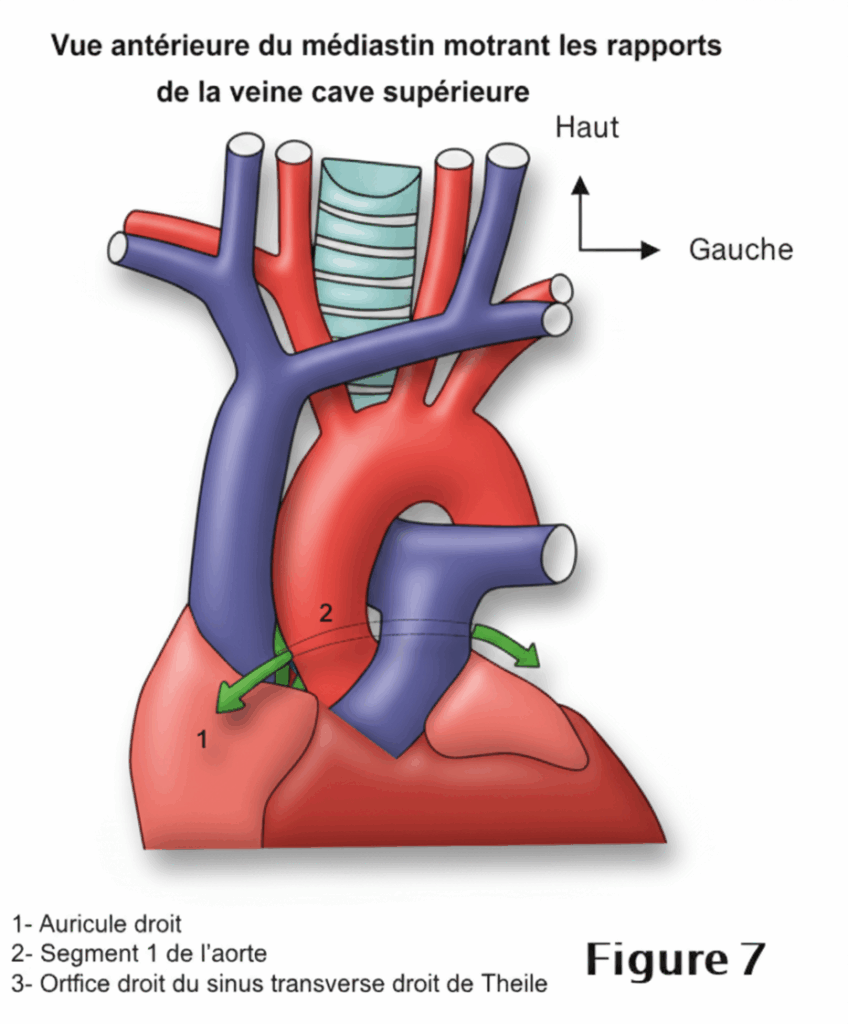
SUPERIOR VENA CAVA SYNDROME
To date, no stent specifically dedicated to this pathology is available.
ID NEST’s contribution consists of offering a “mother” stent equipped with several fenestrations, allowing for the reconstruction of the superior vena cava confluence through the implantation of secondary branch stents.
Other Venous and Arterial Applications
The connected stent concept (T-Stent) can also be applied at different levels in arterial surgery, notably at aortic or arterial bifurcations. This includes, for example, the confluence of femoral arteries during complex endovascular procedures.
Thanks to its modular and flexible design, the T-Stent manages the mechanical constraints specific to bifurcation zones while ensuring optimal blood flow. This versatility paves the way for other major developments in the treatment of complex pathologies:
-
Superior Vena Cava Syndrome: treatment at the superior vena cava confluence.
-
Post-Thrombotic Syndromes: application at the common femoral vein confluence.
-
Treatment of Atheromatous Lesions: targeting the aortic arch, celiac aorta, as well as the aortic, common iliac, and common femoral bifurcations.
-
Aneurysm Treatment: through the coverage of the various T-Stent elements across these same anatomical zones (aortic arch, celiac aorta, aortic, iliac, and femoral bifurcations).
VENOUS T-STENT
ID NEST Medical is developing a modular technology designed to address complex venous compressions. The T-Stent offers stability, precision, and adaptability in the most difficult anatomical zones, contributing to sustainable management.