NUTCRACKER SYNDROME
An often overlooked condition, but with very real consequences.
ID NEST Medical is developing an endovascular solution tailored to venous physiology to sustainably improve its management.
WHAT IS THE TREATMENT FOR NUTCRACKER SYNDROME?
The most effective long-term treatments are surgical:
-
- Transposition of the Left Gonadal Vein: The surgeon reimisplants the gonadal vein into the left iliac vein without surgically accessing the renal vein. This is performed if the gonadal vein permits, in order to direct renal flow directly to the vena cava. However, an iliac stent previously placed for Cockett syndrome (May-Thurner) can sometimes be an obstacle and require adapting the therapeutic strategy.
- The transposition of the Left Renal Vein allows for reimplantation of the renal vein lower in the inferior vena cava, away from the compression zone.
- Transposition of the Superior Mesenteric Artery: The surgeon lowers the origin of the artery so that it no longer compresses the renal vein.
- Venous bypass: This consists of modifying the path of the renal vein to extract it from the pincer.
- Finally, autotransplantation of the left kidney: The surgeon moves the entire kidney (renal artery and vein) lower down on the iliac veins.
AN OFTEN OVERLOOKED VENOUS COMPRESSION
Nutcracker Syndrome (NCS) is characterized by compression of the left renal vein between the abdominal aorta and the superior mesenteric artery.This abnormal pressure hinders renal venous return, causing blood stasis and elevated venous pressure.
Its symptoms vary: abdominal or flank pain, hematuria (blood in urine), chronic fatigue, or even pelvic venous hypertension.
Souvent confondu avec d’autres pathologies, le NCS reste largement sous-diagnostiqué dans le monde.
A TAILORED SOLUTION: THE VENOUS T-STENT
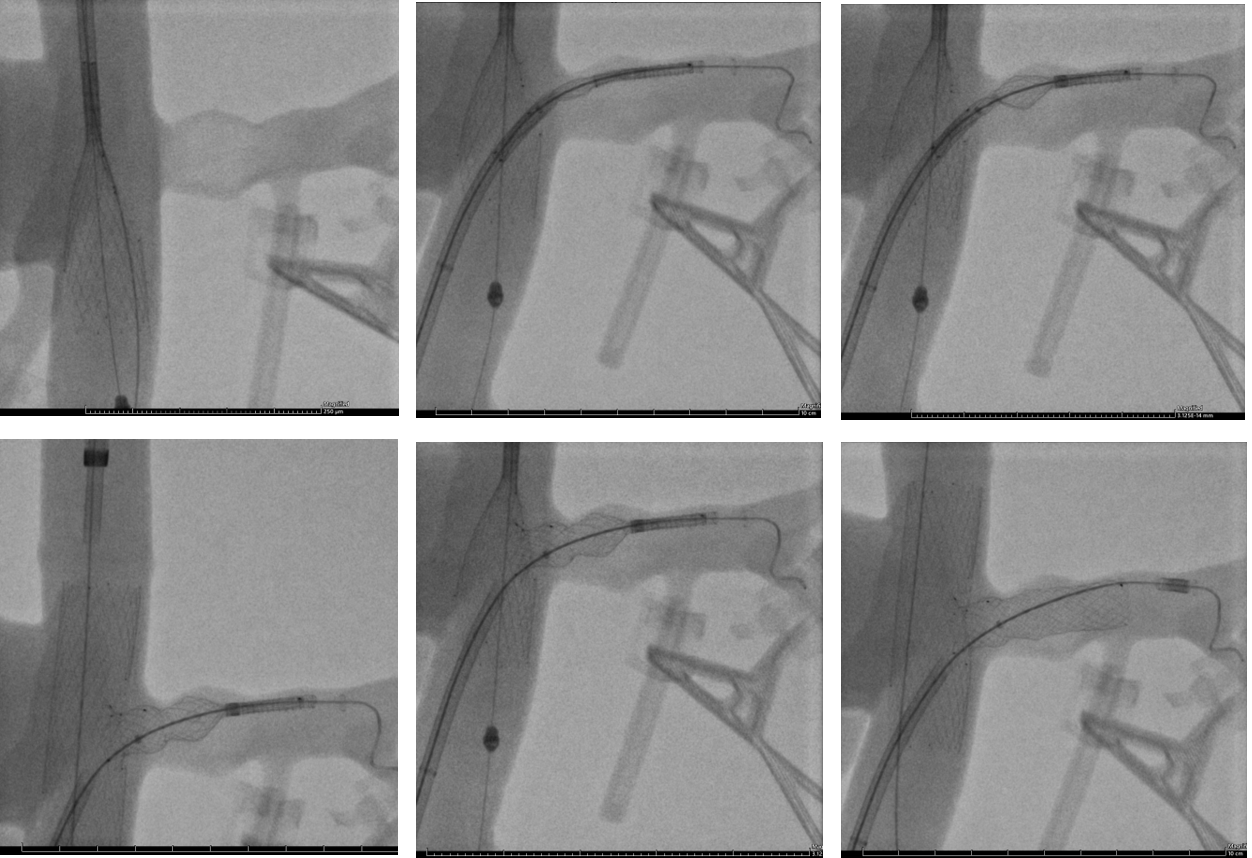
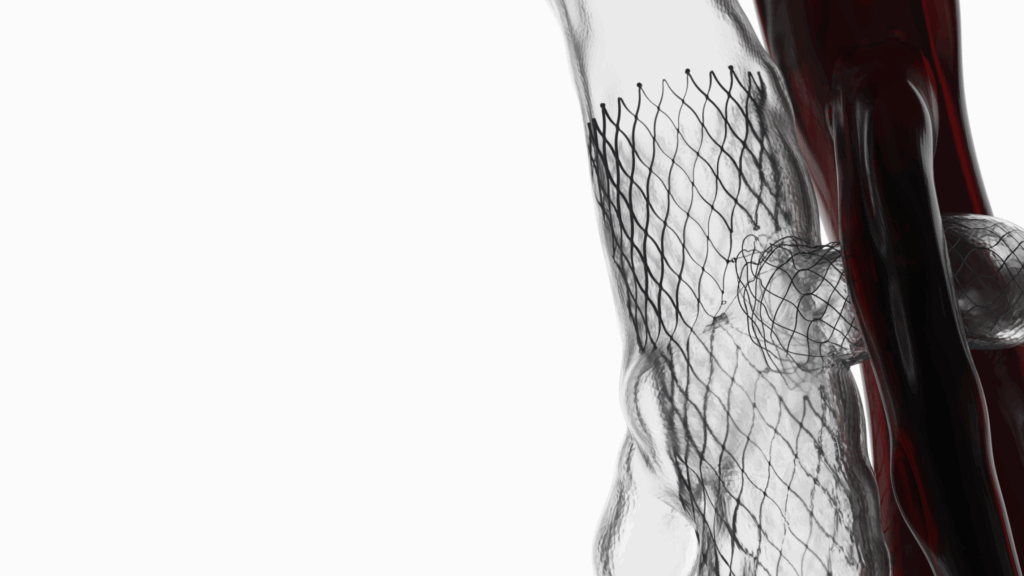
The goal: to restore natural circulation while preserving vein integrity. The Venous T-Stent developed by ID NEST Medical specifically addresses these challenges. Designed to conform to soft and dynamic venous structures, it offers:

ANATOMICAL ARCHITECTURE
The structure of the venous T-Stent is composed of independent stents capable of adapting to variations in the renal vein. This modularity ensures consistent wall apposition, even in cases of severe compression, and limits the risk of deformation.

A PATENTED ELASTIC CONNECTION
The modules are linked by an elastic connection that absorbs the natural movements of the abdomen. This mechanism reduces stress on the vein and ensures stability compatible with the pressure variations specific to Nutcracker Syndrome.

ENHANCED STABILITY
The T-Stent design offers reliable anchoring in a highly mobile anatomical zone. This stability prevents the risk of migration, a major challenge in the management of Nutcracker Syndrome.
OPERATING PRINCIPLE
The venous T-Stent was designed to restore blood flow in the compressed renal vein, the core issue of Nutcracker Syndrome. Thanks to its modular architecture and elastic connections, it adapts to the vein’s morphology while absorbing the abdomen’s natural movements. Once positioned in the compression zone, it creates a stable and uniform channel that prevents the vein from being crushed by surrounding structures.
This mechanical stability reduces intravenous pressure, restores fluid circulation, and provides lasting symptom relief, without causing protrusion or over-expansion.
FAQ
INNOVATION AT THE SERVICE OF RESEARCH
LID NEST teams collaborate with several European university hospitals to evaluate the long-term performance of the T-Stent.
Multicenter clinical studies are being prepared to measure functional outcomes, device durability, and improvement in patient quality of life.
This approach aligns with ID NEST’s commitment to scientifically validating every innovation before making it available to the medical community.